

The State House is approximately one mile away from Columbia, South Carolina’s Colonial Life Arena. The building can accommodate about 18,000 people and generates a lot of noise on a typical Saturday in November. This Thanksgiving weekend, it will host a first for women’s college basketball: the PowHER Player Classic, a tournament centered around HBCU programs, a live NIL marketplace, and a community service component. The event’s name speaks volumes about its goals.
On August 27, South Carolina women’s basketball announced the first tournament, confirming that the Gamecocks will be joined in Columbia by North Carolina Central, Alabama A&M, and Tennessee State. On November 28, NC Central will play Alabama A&M in the opening game of the tournament, followed by South Carolina’s matchup with Tennessee State.
On November 29, there will be championship and consolation games. A Thanksgiving community service event, a Culture Nite Kickoff Dinner, a NIL Marketplace, sponsor activations, and educational sessions for athletes from all four programs are also scheduled for this weekend. That schedule is quite dense, and it seems purposeful.
For the majority of her coaching career, Dawn Staley has been scheduling HBCU programs in South Carolina’s non-conference schedule. The Gamecocks have faced at least one HBCU during the regular season in 15 of her 18 seasons at Columbia. Instead of just hosting, she decided to travel to Baltimore for a home-and-home series with Coppin State. In the NCAA Tournament, South Carolina has faced HBCU teams four times. This interest is not brand-new. However, the PowHER Player Classic takes that dedication and makes it more organized and visible.
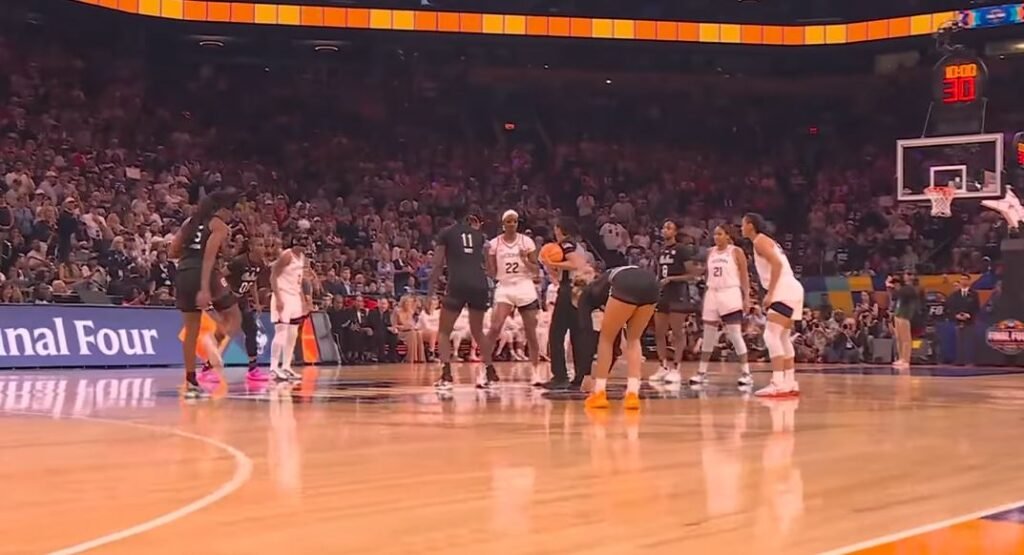
Even though Staley didn’t publicly frame it that way, it seems like she has been preparing for this kind of event for some time. She was candid about the motivation in her remarks during the tournament announcement. She said she was passionate about ensuring that no young women who devote themselves to the game are left behind in its expanding prospects and characterized basketball as a vehicle for access and opportunity.
A game at Colonial Life Arena in front of thousands of fans and a national audience is a different kind of opportunity than a midweek game at a smaller venue; the NIL era has truly changed what exposure can mean for a college athlete financially. Both the game and the surrounding infrastructure are available to the three HBCUs that are participating in this competition.
Not to be overlooked are the personal ties that run throughout this competition. Olivia Gaines, who played for Staley at South Carolina, is NC Central’s first-year head coach. She played for teams that won regular-season titles, advanced to the Final Four, and won the SEC Tournament. Staley coached Candice Dupree while she was a student at Temple.
Dupree is currently the coach of Tennessee State. From 2018 to 2020, Jacob Coltrane, a Tennessee State assistant, served as a graduate assistant for the Gamecocks. These choices aren’t made at random. Beyond a typical scheduling choice, the event has a relational texture.
The off-court programming is handled by Rae Rose Media, a sports-focused business that works with female athletes and women’s athletic programs. The objective, according to company president Erica Berman, is to assist female athletes in turning their increasing visibility into long-term value. That framing is appropriate for the situation. Even three years ago, women’s college basketball had fewer viewers, less sponsorship interest, and less NIL activity. Whether that growth reaches players at programs with smaller platforms is the question. At least one attempt to prove that it can is the PowHER Player Classic.
Observing this from the outside, it’s difficult not to think that college athletics need more of this kind of event—not because it’s charitable, but because it’s useful. In March, Staley made a statement that stuck: HBCUs have occasionally received unfair treatment just for being HBCUs and not Power 4 programs. That is gradually altered by increased visibility, increased competition at prestigious venues, and increased success in national competitions. Not everything will be resolved by the PowHER Player Classic. However, it’s a genuine, palpable step in a worthwhile direction.
