

Something has subtly changed when you enter a mid-sized sports arena in East London on a weekday nite. The crowds are younger. They have sharper kits. And if the current trend continues, there might be an NBA front office representative taking notes somewhere in the upper rows. Not very loudly. Not formally. merely observing.
British basketball, a sport with genuine grassroots energy and nearly no institutional support to match, has been ignored for decades. The former British Basketball League relied on hope and meager funding. Funding from the government was routinely diverted. The national squad never made it to the FIBA World Cup. For a very long time, the gap between what the sport could be in the UK and what it actually was remained obstinately large. Then, slowly, that began to shift.
The establishment of the Great Britain Basketball League under former EuroLeague CEO and Portland Trail Blazers President Marshall Glickman, along with the fall of the old league structure and the rise of Super League Basketball, gave the domestic scene something it had lacked: credible architecture.
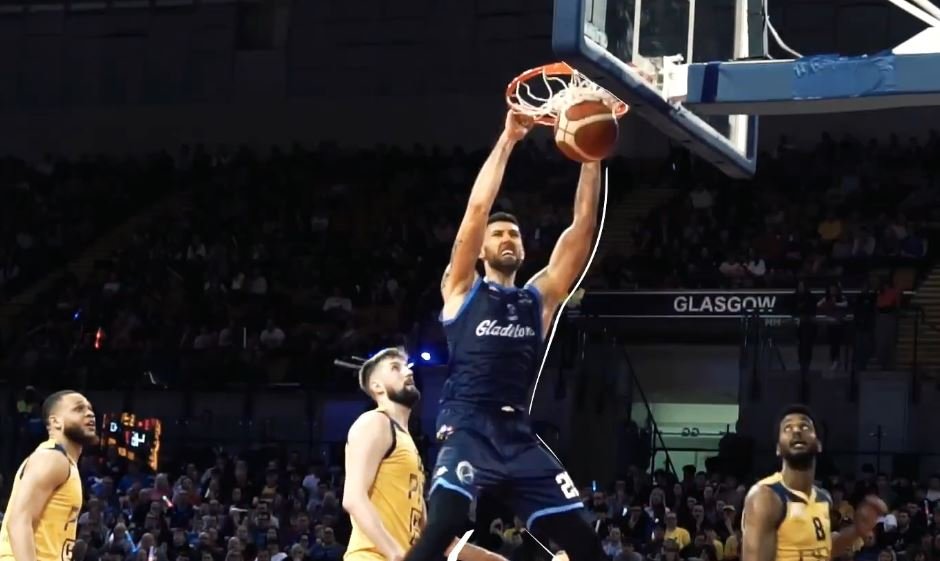
Glickman purposefully delayed the GBBL’s structural launch until September 2027 in order to coincide with NBA Europe’s scheduled tip-off. Compared to the haphazard efforts of previous years, that level of coordination indicates something different. It implies that people are creating long-term structures rather than merely bridging gaps.
London and Manchester are at the center of the goals of NBA Europe, a joint venture with FIBA that aims to launch with between 12 and 16 European teams in October 2027. Just the bidding procedure conveys a narrative.
The final bids for each franchise ranged from $500 million to more than $1 billion. Todd Boehly, a co-owner of Chelsea, entered the discussion. Both Qatar Sports Investments and the Public Investment Fund of Saudi Arabia positioned themselves for the London slot. Numerous investors were involved with J.P. Morgan. That is a city being treated seriously as a sports market in a way that has never been done before; it is not speculative interest.
There is a feeling that the underlying numbers were there, just waiting to be noticed, which contributed to the financial attention. After football, basketball is currently the second most popular team sport among young people in England. The UK is the second-biggest European market for NBA merchandise. Between 2013 and 2019, the O2 Arena regularly sold out of 19,000 seats for NBA regular-season games. There was an audience. There was simply no way to turn that interest into a long-lasting professional ecosystem.
In a way that no league reorganization could have, OG Anunoby’s game-winning basket in Game Four of the 2026 NBA Finals—rising through a throng of spectators at Madison Square Garden with 1.2 seconds remaining to tip in a one-point lead—put British basketball on the front pages. A two-time NBA champion who was born in London is currently personally funding a grassroots court development in Camden. It is difficult to ignore how perfectly that moment arrived at the perfect moment.
In response, the NBA and the UK government jointly invested £10 million in community access, coaching pipelines, and court infrastructure. This kind of foundational spending shows a commitment that goes beyond marketing. Representatives from Real Madrid and Manchester City have attended presentations regarding franchise frameworks. There is a commercial logic to cross-sport. Football teams in Europe have spent decades figuring out how to make money from sizable, fervent fan bases on a variety of platforms. NBA front offices are keeping an eye on that information.
It’s still unclear how the domestic and NBA Europe ecosystems will interact on a weekly basis and whether the potential London and Manchester franchises will field teams in the SLB pyramid as planned without any issues. In practice, structural elegance differs from structural elegance on paper. However, for the first time in the modern history of British basketball, the trajectory is pointing in a single direction. The league is undergoing a revitalization. The funds are genuine. Additionally, the NBA’s interest is now active, focused, and expanding rather than courteous or aloof.
