

One aspect of Stephen Curry’s basketball beginnings is overlooked. His father, Dell, had played college ball at Virginia Tech, and he wanted to attend. He was accepted by Virginia Tech, but only as a walk-on and without a scholarship. Instead, Curry attended Davidson College in North Carolina, where he had the kind of run that coaches and scouts still whisper about.
Curry made 122 three-pointers during his first year at Davidson. At the time, that was the most in NCAA Division I freshman history. Even more impressive was his sophomore campaign: as a No. 10 seed in the 2008 NCAA Tournament, he led the competition in three-pointers made, scoring average, and steals, scored 128 points in four games, and led Davidson to the Elite Eight before losing to Kansas. He was nineteen. Years later, he was named the decade’s defining player by the New York Times. However, in 2008, he was just a slender student from a mid-major institution doing things that larger programs had never seen before.
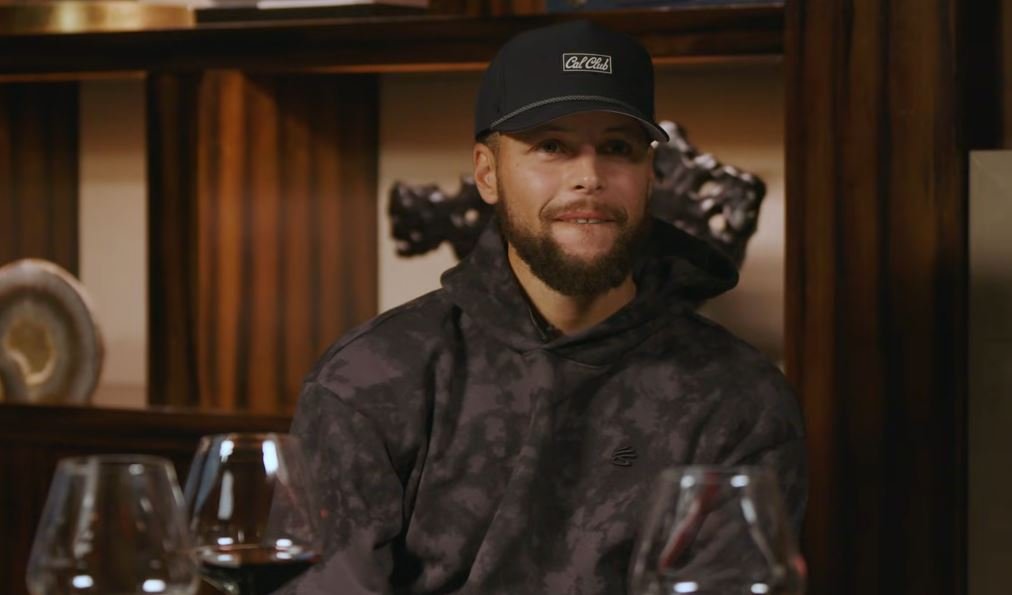
In 2009, he was selected seventh overall by the Golden State Warriors. He received $12.7 million over four years in his first contract. With an estimated $159.6 million in earnings for a single season when salary, endorsements, and business income are taken into account, he became the highest-paid player in NBA history by 2025. Four titles, two MVP honors, a unanimous MVP vote that made him the first in the award’s history, and a complete overhaul of professional basketball were all part of the ascent from one to the other.
The number that still doesn’t feel totally real is the three-pointer. In just the 2015–16 season, Curry scored 402 of them. 286 was his prior personal record. Not only did he smash his own record by 116 makes, but he continued. During the 2020–21 season, he broke Ray Allen’s record for the most three-pointers made in NBA history, and he continues to do so. Nearly every team in the league now shoots more threes than they did ten years ago, which is largely a direct result of what Curry demonstrated was feasible.
There is something noteworthy about his family background. Dell, his father, was an NBA player for sixteen seasons. Sonya, his mother, played volleyball at Virginia Tech. Seth, his brother, was an NBA player. Sydel, his sister, was an Elon volleyball player. Damion Lee, the spouse of his sister, was a four-year collegiate basketball player. Together, the Curry family has participated in NCAA athletics for more than 20 years. Curry’s work ethic may have been influenced by his background in ways that aren’t evident in any stat line.
Curry’s behaviors off the court show that he values causes and eccentricities just as much. Every time he made a three-pointer, he donated three mosquito nets to the UN Foundation’s Nothing But Nets campaign for years. The nets were sent to areas of the world with high malaria rates. The World Golf Hall of Fame awarded him the Charlie Sifford Award in 2024 for promoting diversity in golf, a sport he takes seriously in his free time. Chicken parmesan is his favorite dish. Schitt’s Creek is his favorite television program. He has ten tattoos and follows a rigid pre-game routine: left shoe, right shoe, left brace, right brace. Always.
Curry, who is 37 years old and starting his 17th NBA season, continues to score more than 26 points per game on average. It’s difficult to ignore how drastically different the sport he joined is from the one he will eventually quit. He is nearly solely responsible for that difference between before and after.
