

A player arriving in a new city with genuine promise and genuine questions has a subtle allure. That description almost perfectly describes 21-year-old Cody Williams, who was recently traded from the Utah Jazz to the Minnesota Timberwolves.
Williams was chosen by Utah with the tenth overall pick in the 2024 NBA Draft. He left Colorado with long limbs, athletic tools, and the kind of unrealized potential that scouts are drawn to. Even if the gifts were real, the projection was always a little risky. After two seasons, the Jazz sent him and John Konchar to Minnesota in return for Josh Green and money. On paper, the deal was quiet. Its ramifications were anything but.
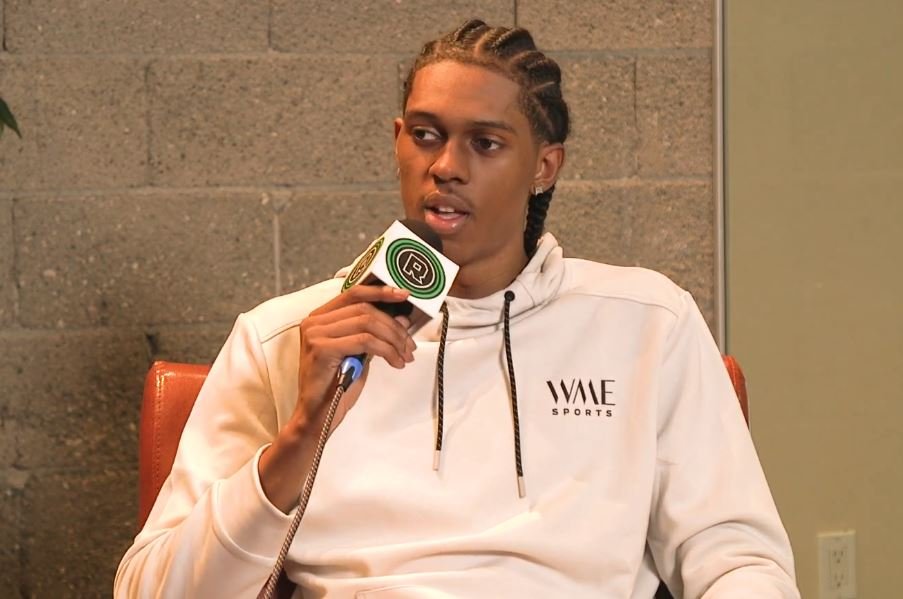
As is often the case with new projects, his rookie season was difficult. He scored 4.6 points on 32 percent shooting per game on average. It’s not exactly the kind of debut that puts an end to doubters. However, his sophomore year was significantly different, with 8.8 points per game, 47 percent from the field, and 67 games played. That trajectory seems to have quietly encouraged the Jazz. They still traded him after that. Even though it isn’t necessarily a judgment on Williams personally, it does reveal something about Utah’s current priorities.
With this one, Jazz conveyed a fairly clear message. They were looking for a proven 3-and-D wing who could join a rotation today rather than in two years. That guy was Green, a 25-year-old veteran of six years. Utah isn’t necessarily giving up on young people. Keyonte George, Ace Bailey, and Darryn Peterson are still with them. However, there’s a difference between nurturing young players and just waiting indefinitely to see which ones make an impact. Utah appears to have had enough waiting.
Williams might find that his new surroundings are just what he needs. Minnesota is not a team in the process of rebuilding. In what has been a truly important offseason, they have added LaMelo Ball and Jonathan Kuminga in addition to Anthony Edwards and Rudy Gobert as their spine. It is not anticipated that Williams will carry anything. He will be required to pass, cut, rebound, and defend several positions—a glue-guy role that fits his 6-foot-8 stature, good length, and athleticism.
His three-point shooting is the only thing that truly worries me. Career: 24% from beyond the arc on a small number of shots. There is no way that number can remain the same. The fact that he is now playing with real shot creators for the first time in his NBA career is encouraging. Edwards is a commanding presence. Defenders are drawn to the ball. More open looks should be available to Williams than Utah’s offense could provide. The unanswered question that will likely determine whether this stint becomes something genuine is whether he converts them.
It’s difficult to ignore the fact that these kinds of trades are rarely regarded as the real opportunities they occasionally turn into. Williams ends up on a team that can both ask him to make a significant contribution and shield him from taking on too much responsibility too soon. Finding that kind of environment is more difficult than it seems. To finally let go and play, some young players require the precise combination of a competitive team, less pressure, adequate spacing, and patient coaching.
Perhaps a team vying for the Western Conference uses him as a rotation player. Perhaps it doesn’t work out and he wanders around trying to find another opportunity. It’s too soon to tell. However, Cody Williams has improved each season thus far, and that upward line is more significant than most people realize at the moment.
