

Five is a number that keeps coming up in discussions about Caitlin Clark these days, and it’s difficult to let go of. At least 30 points and 10 assists in five career games. That may seem insignificant, but over the course of the league’s history, the rest of the WNBA has played exactly four such games. When you first read the math, it doesn’t quite make sense. When you read it again, it doesn’t.
On August 23, the Indiana Fever defeated the Chicago Sky 113-90 thanks to 37 points and 10 assists from Clark. On a nite when everything seemed to go through the net with ease, she also shot 8-of-12 from beyond the arc and made eight three-pointers, a career high. Although the United Center crowd wasn’t exactly cheering her on, when something truly out of the ordinary occurs on the court, a certain silence falls in the opposing arena. It seemed like one of those evenings.
The Caitlin Clark WNBA statistical records discussion is more fascinating than the typical “generational talent” chatter because, upon closer inspection, the numbers become more bizarre rather than flatten.
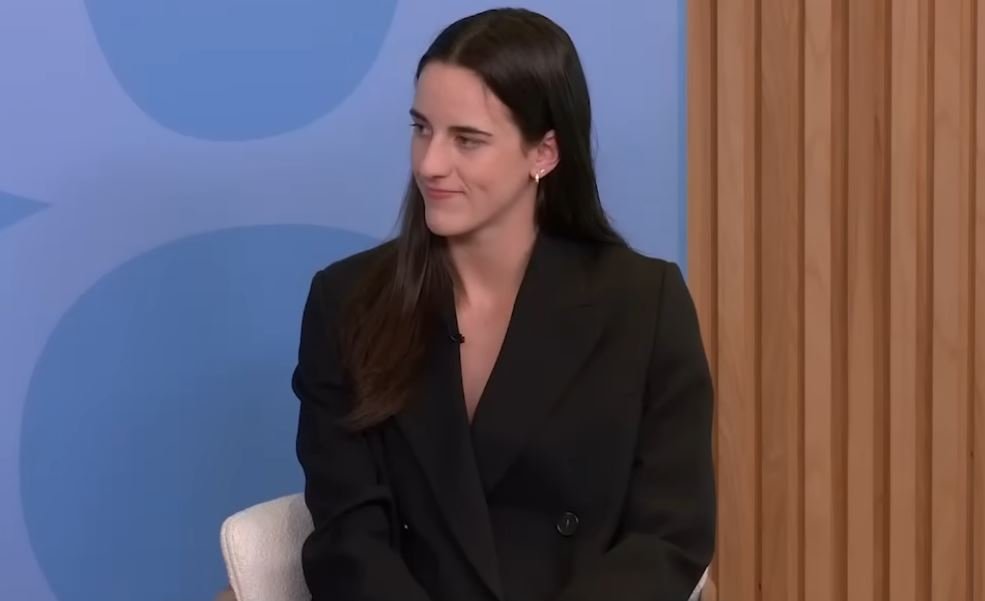
She has averaged 20.0 points, 8.4 assists, and 4.8 rebounds per game through 88 games in her career. Particularly this season, she has averaged 22.1 points and 8.3 assists per game while shooting 45% from the field for the Fever, a team that has experienced ups and downs. These aren’t merely impressive figures. These are the ones that make people look up previous box scores to confirm the context.
It’s important to note that Clark’s 2025 season was cut to just 13 games, so her career trajectory isn’t exactly straight up. Bumps are present. However, the trajectory over three seasons—a 19.2-point rookie season, a shortened sophomore campaign, and now a 22-point third season with increased efficiency—indicates that the player is still looking to improve, which is unsettling for everyone else in the league.
The assist numbers are worthy of their own time. In just 88 games, Clark amassed 742 career assists. With a 43.3 percent assist rate this season, she has contributed to almost half of her team’s baskets while she is on the court. The 30-point, 10-assist combination feels less like a coincidence and more like a recurring event that only she seems capable of producing because that kind of court vision doesn’t show up neatly on a highlight reel, but it does show up in the win column over time.
Observing Indiana this season gives the impression that Clark is simultaneously functioning as a “really good player” and a “statistical anomaly.” With five games left, the Fever are in fifth place in the standings and are actively pursuing a postseason run. For good reason, A’ja Wilson continues to be the front-runner for MVP. However, if Indiana continues to rise, Clark’s case might become more intriguing in the closing stages.
What this type of statistical output means for the WNBA as a whole is more difficult to quantify. The competition is actually better than it was even five years ago, the league is expanding, and the rosters are deeper. Because of this, Clark’s record-breaking numbers carry a little more weight. These are not thin-era soft records. They are currently being set against actual competition by a 24-year-old Des Moines resident who, according to most reasonable estimates, still has years of this ahead of her.
