
Early announcements are made by some rookie classes. That’s precisely what the freshman class of the 2020–21 NBA season accomplished, possessing enough individual talent to fuel debates that haven’t been fully resolved even years later. A 19-year-old Charlotte point guard who had already played professional basketball in Lithuania and Australia before the majority of his peers had graduated from college was at the center of it all. Even though the case wasn’t quite as clear-cut as the outcome indicated, it’s difficult to argue that the voters made a mistake when LaMelo Ball won the 2021 NBA Rookie of the Year award.
In just 28.8 minutes of action, Ball averaged 15.7 points, 5.9 rebounds, and 6.1 assists per game throughout the season. For a teenager still getting used to NBA spacing and defensive schemes, those are unusual numbers, especially the assist figure, which showed a passing instinct that appeared genuinely advanced.
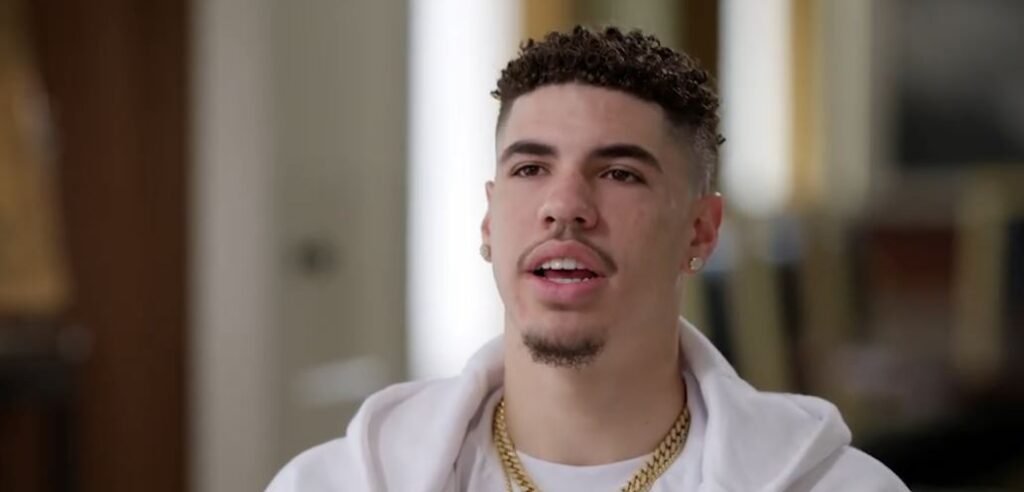
He demonstrated a talent for the creative pass that was challenging to teach, and he shot 43.6 percent from the field. At Charlotte’s Spectrum Center, a young roster beginning to forge an identity around a player who appeared to play the game one or two decisions ahead of everyone else on the floor gave the impression that the team was learning something in real time.
Contrary to what the final score might suggest, the race was actually closer. With an average of 19.3 points per game for Minnesota, which was the highest scoring average in that rookie class, Anthony Edwards, the first overall pick out of Georgia, made a compelling case with his athleticism and output.
There is a strong case that Edwards might have prevailed in other situations. The games were frequently lopsided, the Timberwolves were rebuilding, and there weren’t enough victories to present his stats in the best possible light. However, the points were scored, and Minnesota supporters continue to discuss what that debut season revealed about his potential.
With 114 voting points compared to Ball’s 465, Tyrese Haliburton was the third prominent name in the discussion. In Sacramento, Haliburton averaged 5.3 assists in 30 minutes per game and shot 40.9 percent from three while leading a Kings offense that gave him real responsibility. It’s possible that Haliburton’s rookie season receives more recognition than it did in a different draft year, one in which Ball and Edwards don’t garner the majority of the attention. From the beginning, he appeared to have a deep understanding of the game that wasn’t always evident in a conventional box score.
The backdrop was what made the 2020–21 class especially fascinating. Due in part to the ongoing pandemic recovery, the season was shortened and played under altered conditions. Instead of 82 games, teams played 72. Each player’s rotations and development timelines were impacted differently by bubbles and shortened camps. Any final ranking of the group is clouded by the difficulty of determining precisely what an 82-game season would have shown about Ball, Edwards, or Haliburton.
On election night, the outcome was never truly in doubt because Ball received 84 first-place votes to Edwards’ 15. In a game that felt like a pivotal moment for the Charlotte team in February 2021, he became the youngest player in NBA history to record a triple-double against the Hawks. As it happened, it seemed like the Hornets hadn’t had a player like this since the league’s inception—someone who could cause a crowd to react before the ball even left his hands.
When combined, the rookie class of 2020–21 has performed admirably. At the next level, Ball, Edwards, and Haliburton all became significant contributors. The competition surrounding the award, which went to the right player in the right season, made that specific period of NBA history worth revisiting.
