

In the NBA, late August often feels like the calm following a storm. The rosters are largely set, the majority of the big names are gone, and the remaining moves have the distinct smell of desperation. The Los Angeles Lakers are currently in that situation after 23-year-old forward Jonathan Kuminga, who was their top target for the majority of the summer, decided to sign with the Minnesota Timberwolves.
According to Shams Charania, the agreement is a $13 million, two-year contract with a player option for the second season. It appears modest on paper. In contrast, the Lakers had offered Kuminga over $12 million a year for three years, with a starting role and a guarantyd salary of at least $36 million. No, Kuminga replied. Shorter was what he desired. He desired adaptability. In essence, he wanted to avoid securing his future with a franchise that was still figuring things out.
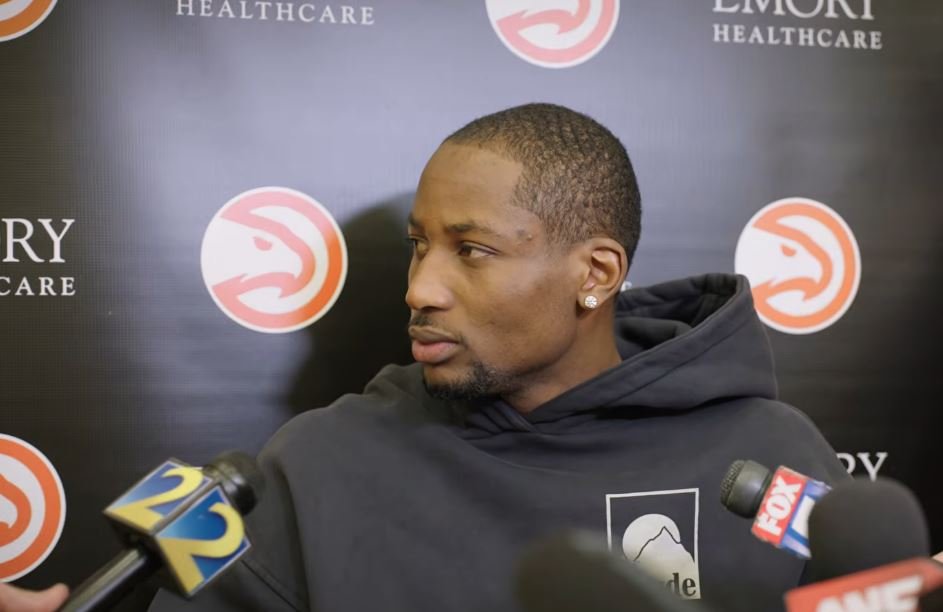
It’s difficult not to interpret that. The Lakers had set themselves up ahead of time. Rob Pelinka was reportedly among the first to call after Atlanta decided not to exercise their $24.3 million team option on Kuminga following the trade deadline. A sign-and-trade was discussed. The president of Minnesota, Tim Connelly, took a plane to Miami to meet with Kuminga for four hours. He was personally recruited by Anthony Edwards. The Wolves put in the effort, and it was evident.
Losing Kuminga hurts the Lakers because it was a perfect fit. LeBron James‘ departure for Philadelphia made it even more difficult to overlook their roster’s long-standing lack of athleticism at the wing. This Lakers team has been lacking Kuminga’s ability to finish in traffic, pressure the rim during transitions, and defend larger forwards. It’s okay that he isn’t a creator in the conventional sense; LA didn’t require him to be.
Rather, Kuminga is traveling to Minneapolis, where he will join Edwards, LaMelo Ball, Jaden McDaniels, and Rudy Gobert in a starting five. That is a strong group. The physical potential of that lineup is genuine, but the spacing issues with Kuminga and Gobert together are worth keeping an eye on. Minnesota is covertly constructing something that appears hazardous.
Even though Kuminga’s way of thinking is risky, there is some logic to it. Last season, he averaged 12.2 points and 5.6 rebounds while playing in Golden State and Atlanta. These are respectable stats, but they don’t support a long-term commitment at a higher salary.
He is aware of that. By accepting a shorter contract, he is effectively giving himself a year to demonstrate his ability to be a reliable, successful player before becoming a free agent once more. If it succeeds, the subsequent salary will probably be far greater than what the Lakers offered. That’s the risk if it doesn’t.
It’s still unclear if the Lakers were depending more on Kuminga than they made public or if they had a workable backup plan in place. Bruce Brown, a 30-year-old veteran guard, has been linked to the team; however, with 16 players already under contract, the math becomes challenging. Before anyone else could come, someone would have to go. That’s the current situation.
Despite all of the movement this offseason has brought about, it seems like the Lakers are in a somewhat familiar situation where they are on the verge of something but not quite there. There seemed to be momentum behind the Kuminga chase. There was talk about the sign-and-trade framework. The initial position was made available. Then Minnesota just wanted it more.
The upcoming year will provide answers to many questions for Kuminga. The Timberwolves already have two stars, so they don’t need him. They need him to run the floor, defend, and use the ball wisely. That’s a fair request. Nobody is yet sure if he can deliver it consistently.
